
key insights
- Bond yields matter beyond Fed decisions. CoinShares argues that concerns about government debt could increasingly shape cryptocurrency valuations.
- Institutional demand has weakened. The $11.1 billion figure shows the money that has come in since mid‑July. The newest reporting week showed a slower pace.
- Bitcoin’s hedge role remains conditional. Rising yields could help Bitcoin attract people looking for monetary assets but they can also make traditional fixed‑income investments more appealing.
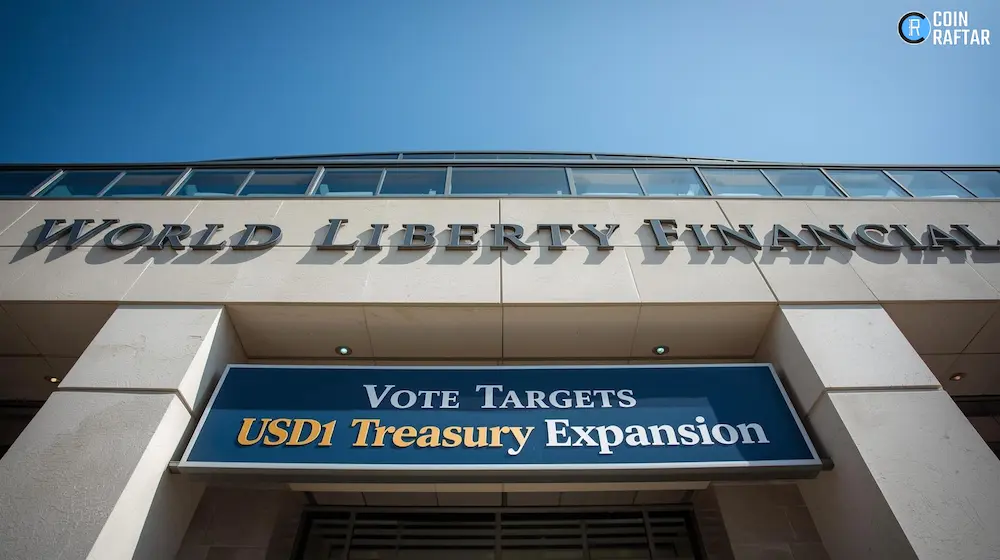
Bitcoin could benefit from rising concerns about U.S. Government debt as higher Treasury yields become more influential in markets. CoinShares said on October 8 2026 that bond market developments may shape Bitcoin values significantly, than future Federal Reserve decisions. The warning comes as digital asset investment inflows lose momentum following $11.1 billion in cumulative inflows since mid-July.
Digital asset fund inflows lose momentum
CoinShares reported a marked slowdown in digital asset investment product inflows during the latest reporting week. The firm attributed the changing market environment to uncertainty surrounding borrowing costs, inflation and economic growth.
The $11.1 billion figure covers cumulative inflows since mid-July, rather than investments made during the latest week. CoinShares did not say how much money came in or went out in its October 8 report.
Weaker employment, persistent inflation and rising Treasury yields are pulling markets in different directions.@jbutterfill looks at why @Bitcoin has still ground higher, and why the bond market may now matter more than the Fed.
Read the full update: https://t.co/ZbU0q8HC80 pic.twitter.com/qhQBBJYFtt
— CoinShares (@CoinSharesCo) October 9, 2026
Earlier buying activity showed that institutions were again interested in investing in cryptocurrency products. Now investors are getting mixed signals, from job market data inflation forecasts and the cost of government borrowing.
The slowdown does not establish that institutions have abandoned digital assets.Rather, it emphasizes “uncertainty in the sustained pace of recent demand as financial conditions evolve.
CoinShares pointed out that bond market developments play a role in deciding if institutional demand will grow again. If money keeps pouring into investments it might show that people are starting to see cryptocurrency as a kind of money.
Treasury yields put pressure on financial markets
U.S. Treasury yields have risen to levels that CoinShares said are the highest in over twenty years. In the analysis from October 8 CoinShares noted the 10‑year yield was above five point three percent and the 30‑year yield was close to five point seven percent. Long‑term borrowing costs went up in September with the 10‑year yield jumping by, than fifty basis points.
The rise continued despite Treasury Department efforts to support market liquidity through bond repurchases.
In August, the Treasury expanded certain long-term buyback operations to at least $4 billion per operation. The expanded program was scheduled to continue through early November.
But higher production caused questions to crop up about the demand for government debt and Washington’s need for money. However, CoinShares claimed that the developments might not be limited to conventional monetary policy concerns.
After that, government securities continued to be in demand in the Treasury auctions. The 10-year auction on Tuesday was about 5.23% and the 30-year auction was 5.618%.
Those outcomes are indicative of investors’ continued purchasing of Treasury securities in the face of higher borrowing rates. The fact that yields rose, however, does not provide any indication of whether the rise was attributable to fiscal issues, inflation expectations or other market factors.
The primary issue is the issue of debt
CoinShares believes that it’s more important to understand the reason for the higher yields than the yield itself. When there are higher yields due to economic growth or a contraction in monetary policy, it can put pressure on risk-sensitive investments.
But yields based on concerns about government finances might result in a different reaction. Investors worried about long-term fiscal sustainability may seek assets outside traditional government-issued money.
CoinShares chief executive Jean-Marie Mognetti has described the changing environment as a structural financial shift known as “Capital Nationalism.” Under this interpretation, governments increasingly prioritize national financial interests, potentially changing traditional portfolio diversification strategies.
Mognetti argues that conventional government bonds may offer less protection against financial instability than investors have historically expected. He also points to elevated valuations among large U.S. stocks and their limited downside protection.
The firm sees Bitcoin’s fixed supply and independence from government control as characteristics that could attract investors seeking monetary alternatives. However, that potential remains conditional rather than established by the latest investment flows.
Higher yields can also increase the appeal of interest-bearing assets and raise financing costs across financial markets. Consequently, investors must distinguish between yields rising because of economic strength and increases associated with fiscal concerns.
Federal reserve expectations and the outlook
Weaker September employment figures reduced market expectations for another Federal Reserve interest rate increase in October. CoinShares reported that the implied probability fell to 23%, down from 71% three weeks earlier.
Despite weaker hiring data, inflation remains a concern. Elevated oil prices, partly linked to tensions involving Iran, have complicated expectations for future monetary policy.
Federal Reserve Vice Chair Philip Jefferson also indicated on October 2 that policymakers might need time before considering another increase. Meanwhile purchasing managers index readings continued to indicate expansion.
Investors were awaiting Septembers Consumer Price Index report, scheduled for October 14 to assess inflation pressures. Third‑quarter gross domestic product and September personal consumption expenditures data were also scheduled for October 29.
These releases could influence expectations for borrowing costs. Determine how investors interpret rising Treasury yields. CoinShares identified renewed fund inflows as a signal, for assessing whether fiscal concerns are strengthening cryptocurrency demand.