
Chainlink launched CCIP 2.0 on September 28, adding new verification, compliance, and settlement features to its cross-chain infrastructure.
The upgrade is aimed at institutions moving tokenized assets between different blockchain networks. LINK also moved higher, gaining as much as 8.6% in 24 hours. The token traded near $15.32 after reaching $15.76.
CCIP 2.0 lets users add their own Cross-Chain Verifiers, or CCVs. They can also set transaction rules and choose confirmation requirements based on their needs.
https://x.com/chainlink/status/2104550070922129569?s=20
CCIP 2.0 Adds Custom Verification
Asset issuers now have more control over how cross-chain transactions are verified. They can run their own CCVs or use third-party verification providers.
There is another option, too. Destination chains can require specific verifiers to approve a transaction before it goes through. Chainlink’s documentation also supports threshold-based policies, where several optional verifiers can approve a message before execution.
CCVs can run on infrastructure from Amazon Web Services and Google Cloud. Infosys and Nethermind are also developing verification services.
The upgrade brings Chainlink’s Automated Compliance Engine into the cross-chain system. Issuers can use it to create rules for supported assets, including allowlists, sanctions screening, transaction limits, and eligibility requirements.
That matters for assets with restrictions on who can hold or transfer them. Instead of handling those checks separately, issuers can apply the rules within the transaction process.
Institutions Gain Settlement Control
CCIP 2.0 also changes how issuers can handle transaction confirmation. The default setup waits for finality on the source blockchain, but issuers can choose different confirmation thresholds.
That creates room for different settlement approaches. A transaction requiring faster execution can use a shorter confirmation period, while a larger transfer can wait for stronger confirmation.
Chainlink said CCIP currently secures more than $84 billion in cross-chain token value. More than $15 billion migrated to the infrastructure over four months, according to the company.
These figures come from Chainlink and have not been independently verified as market-wide totals. The company cited WBTC from BitGo, cbBTC from Coinbase, and kBTC from Kraken among the assets using CCIP.
Chainlink Expands Financial Infrastructure
CCIP’s use cases now extend across tokenized assets and financial infrastructure. Chainlink has worked with Swift, DTCC, Euroclear, UBS, ANZ Bank, Fidelity International, and SBI Digital Markets.
On September 22, Infosys said it would explore blockchain infrastructure with Chainlink. Its work covers cross-chain connectivity, compliance, financial data, and reserve verification.
https://x.com/chainlink/status/2102382759746351423?s=20
Chainlink has also partnered with Bottomline to explore cross-border payment applications. Bottomline operates a network serving more than 600 banking clients.
Meanwhile, Chainlink has expanded access to U.S. economic data across multiple blockchains. The feeds cover real GDP, the PCE Price Index, and Real Final Sales to Private Domestic Purchasers.
LINK Rallies as CCIP 2.0 Goes Live
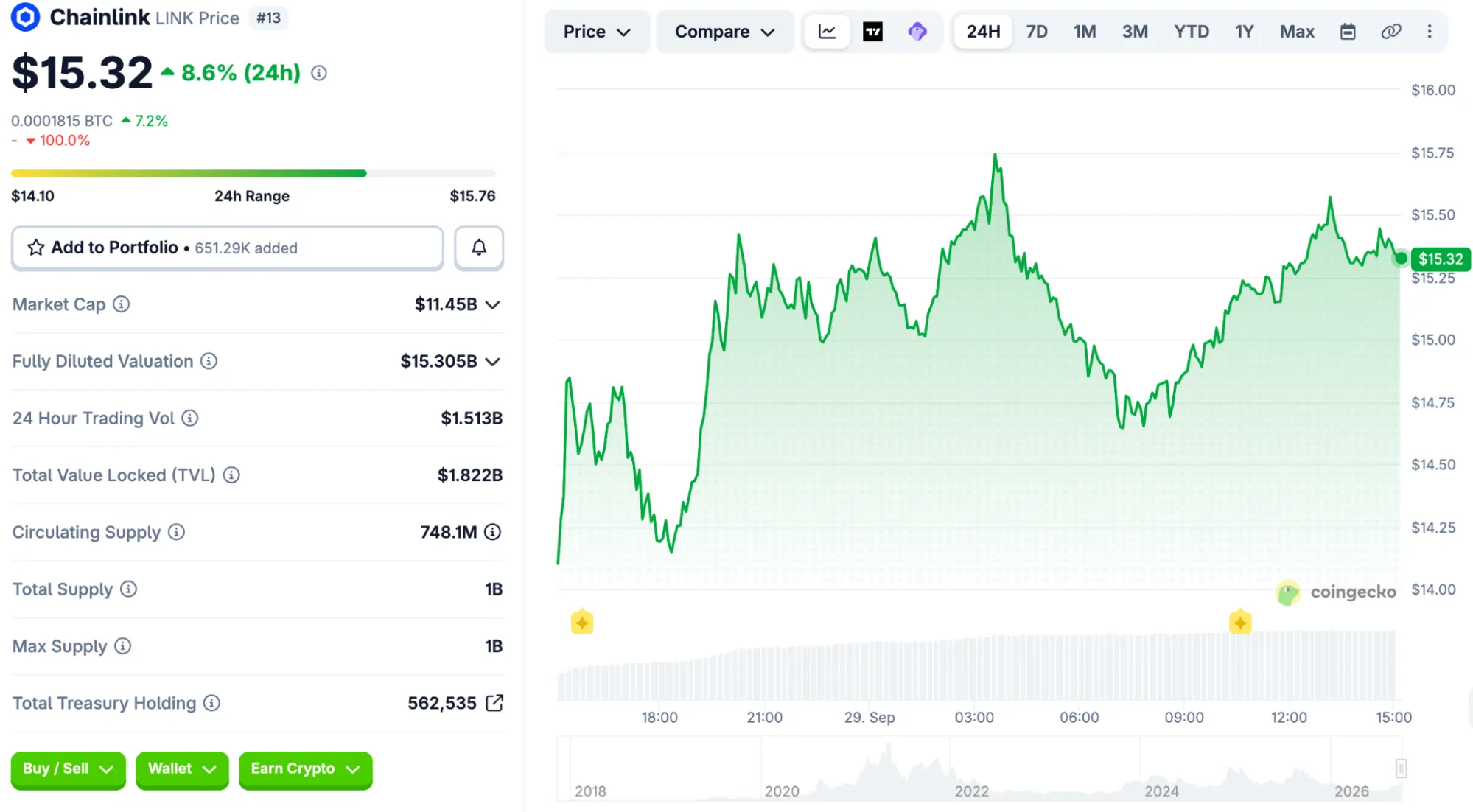
LINK traded around $15.32, up 8.6% over 24 hours. Trading volume reached about $1.51 billion during the same period.
The token started the move near $14.10 and briefly slipped toward $14.20. It then pushed above $15 before reaching an intraday high of about $15.76.
 Source: CoinGecko
Another pullback took LINK near $14.65 before the token recovered. Market data put Chainlink’s market capitalization at roughly $11.45 billion, with a fully diluted valuation of about $15.31 billion.
Circulating supply stood at around 748.1 million LINK. Total and maximum supply remained at 1 billion tokens.
Santiment said Chainlink reached a 2026 high of $14.89 while non-empty wallets fell to 912,020. The firm linked the decline to some smaller holders taking profits during the rally. It also said the holder base remained close to historic highs.
RWA Data Shows Mixed Growth
RWA.xyz data cited in the supplied material shows that the value of real-world assets secured through CCIP dropped more than 0.9% over roughly 30 days.
That decline comes as Chainlink continues to work on tokenization, payments, compliance, and financial-market infrastructure.
Chainlink has estimated that on-chain financial markets could eventually reach $600 trillion. That is the company’s projection, rather than a measure of the market’s current size.
Its work with Swift and other financial institutions has also connected CCIP more closely with traditional financial infrastructure. Still, the new features will need to see wider use before their impact on institutional blockchain activity becomes clear.