Key insights
- Solana is not aiming to launch another institutional trading product, it’s focusing on the settlement infrastructure.
- The participation of JPMorgan is to settle the matter but not as a commercial endorsement.
- Volume testing will continue to be an important factor to consider in institutions’ adoption, as will privacy.
Solana DvP started on Oct 6, offering banks and big financial companies a system for quicker trade settlement. The Solana Foundation said the program can handle asset and payment parts at the time in seconds instead of taking one or two days.
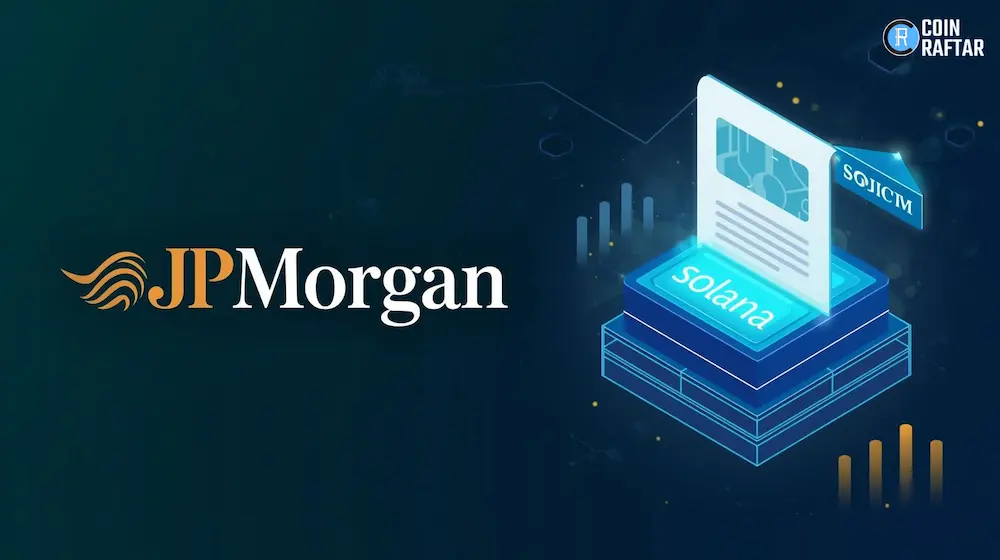
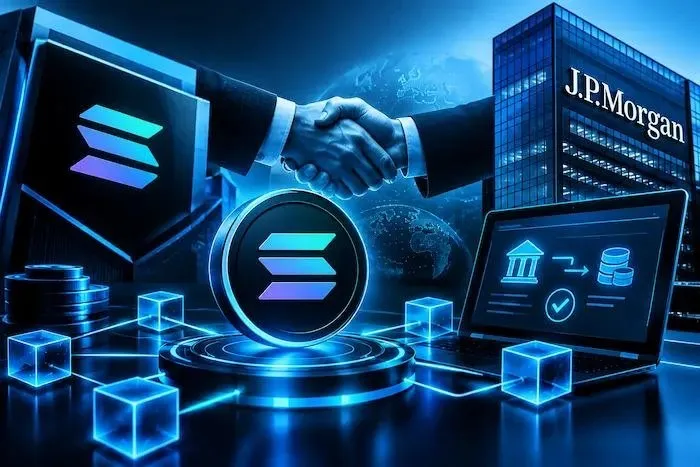
JPMorgan provided settlement knowledge during the building phase helping to create rules, for users and regulated tokens. However the bank did not create, run, support or say it likes the program.
Until now, institutions settling onchain have typically relied on bespoke smart contracts.
Solana DvP gives them a shared, open standard for atomic delivery-versus-payment, with input from J.P. Morgan on securities settlement practices 🧵
— Solana Foundation (@SolanaFndn) October 6, 2026
Solana DvP targets a longstanding settlement risk
Traditional securities markets usually involve middle parties before a trade is fully settled. Clearinghouses, custodians and depositories can cause settlement to take one or two business days.
That delay brings counterparty risk. One party might deliver the asset before receiving the payment. Delivery versus payment solves this risk, by making sure both the transfer of the asset and the transfer of money happen at the time. Each side only gets the sides value if they receive their own.
The Solana Foundation said Solana DvP puts the asset and payment legs into one atomic blockchain transaction. Both transfers complete together, or neither transfer takes effect.
Catherine Gu, the foundation’s head of product for digital assets, said atomic settlement removes counterparty risk found in traditional finance. She also described the program as an open standard with finality in seconds.
The foundation released the software under the MIT license. This means institutions and developers can use and change the code freely. The goal is to replace custom contracts that are built for single institutional deals.
JPMorgan helped shape institutional requirements
JPMorgan gave input based on its experience, with securities settlement and how institutional markets operate. Its contribution included requirements involving deadlines, escrow arrangements and controls used by regulated token issuers.
Rhodel D’Souza, JPMorgan’s head of markets digital assets, said institutional markets need shared infrastructure for atomic delivery versus payment. He said such infrastructure can help firms scale without adding settlement risk or counterparty exposure.
The bank’s role remains limited to advisory input, according to the foundation. Therefore, the launch does not represent a JPMorgan commitment to use Solana DvP commercially.
The program supports Solana SPL Token and Solana Token 2022 standards. The program also supports features such as tokens, permanent delegates and transfer hooks.
Those controls matter, for issuers that may need to restrict or pause transfers. As a result the system can support assets with compliance requirements that go beyond ordinary cryptocurrency transfers.
Audits strengthen the case for institutional use
The foundation said external auditors reviewed the program before its launch. Cantina identified 21 findings during its May security review, including four medium-risk issues.
The development team fixed all four medium-risk findings, according to the security review. It also addressed several low-risk and informational findings before the public launch.
Solana DvP uses escrow accounts for the asset and payment sides of each transaction. A settlement authority then approves the transaction, while the counterparties determine which institution handles that role.
The system also supports settlement deadlines and earliest settlement times. However it does not handle order matching, price discovery, netting, partial fills or customer eligibility checks.
These functions stay outside the settlement program. Need to be provided by other systems. Token-level controls can also handle eligibility requirements for restricted assets.
Privacy remains a major development area. The foundation plans confidential settlement features, which could help address concerns from institutions using public blockchain infrastructure.
Solana faces growing institutional competition
It is a launch on the heels of banks, asset managers and blockchain companies looking to roll out tokenized financial goods.It’s a launch in the wake of banks, asset managers and blockchain firms looking to roll out tokenized monetary merchandise. BlackRock has just launched a tokenized money market fund on Solana and Ethereum.
Kraken also leverages Solana technology on its xStocks platform, which provides tokenized stocks of U.S. equities to eligible overseas investors. In the interim, JPMorgan has been experimenting with blockchain settlement with its Kinexys platform.
This has led to JPMorgan’s Kinexys engaging in cross-chain delivery-versus-payment testing with Ondo Finance. The ClearToken is also using DvP infrastructure through the Canton Network.
Solana’s approach differs because the program operates on public blockchain infrastructure. The foundation is now seeking design partners and early participants before a broader production release.
Solana DvP therefore represents an infrastructure bet rather than an immediate shift in institutional settlement. Its open-source model could lower integration barriers, but adoption will depend on banks and asset managers.
Conclusion
Solana DvP offers organizations a way to do atomic settlement on a public blockchain. JPMorgan brings knowledge that helps with traditional settlement processes while the foundation is in charge of the platform.
This program comes at a time when tokenized assets are moving from being experiments to financial uses. If companies use this standard Solana may become more important, as a way to settle digital assets that are regulated.
Now the foundation has released the technology and made it available for people to use. How important it becomes in the future will depend on how many people use it how much business it handles and whether it adds the privacy features that are planned.