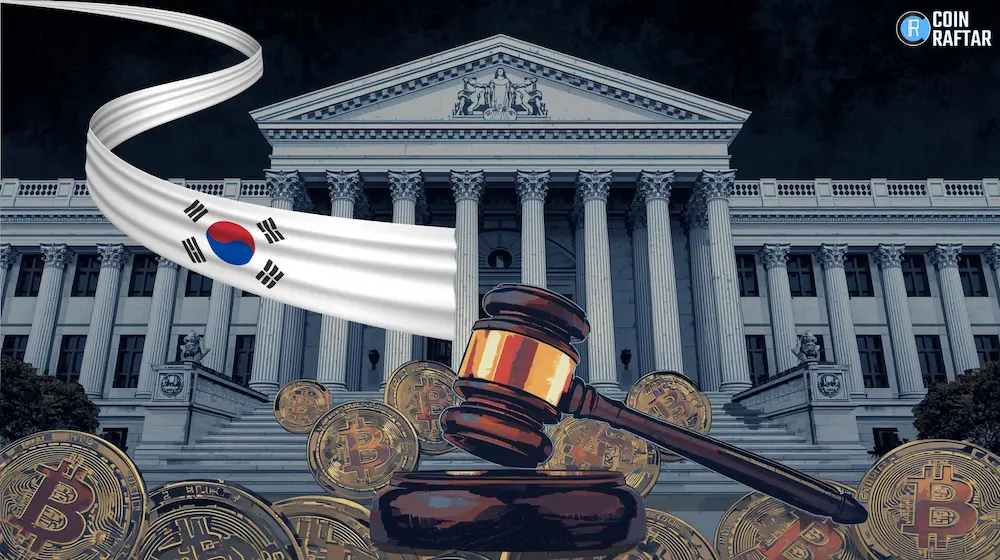
Malaysia is set to launch its first spot Bitcoin exchange-traded fund (ETF) with Halogen Capital’s Sharia-compliant version to begin trading on Bursa Malaysia’s Main Market on December 2, 2026. The fund will open the way for both retail and institutional investors to gain exposure to Bitcoin without having to purchase and hold or manage the cryptocurrency.
The development is following the regulatory approval by the Securities Commission Malaysia (SC) and the registration of a fund’s prospectus. The ETF will list in two currencies, the ringgit, the local currency, and the U.S. dollar, so that investors will have two ways to gain access to the Bitcoin listed on the country’s stock exchange.
The launch is also the first time a publicly traded investment product is introduced that meets Shariah requirements and is religiously compliant under the supervision of Amanie Advisors.
The Malaysia Spot Bitcoin ETF is bringing exchange-based Bitcoin exposure.
The Halogen Shariah Bitcoin ETF is meant to replicate the FTSE Bitcoin Index and comply with its Shariah investment specifications. The fund is not meant to be a means of holding the cryptocurrency but to purchase units in the fund from an existing brokerage account.
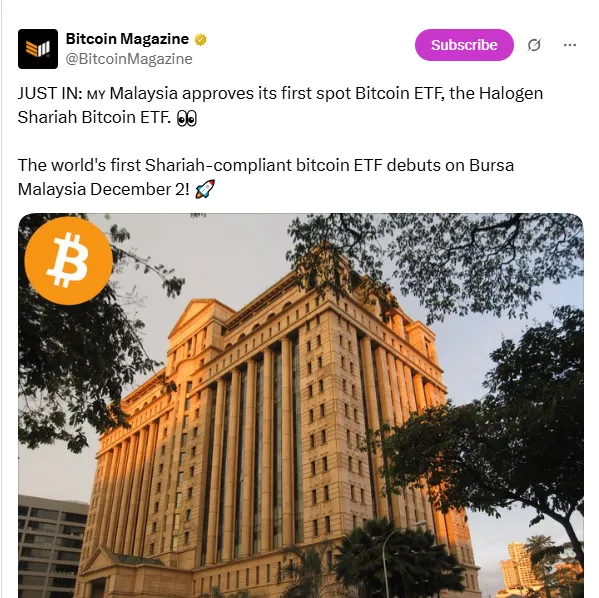
Source: Bitcoin Magazine
The fund will be managed by Halogen Capital Sdn Bhd, which claims the product is the first spot Bitcoin ETF and the first digital currency ETF to be quoted on Bursa Malaysia.
The fund will be listed on two separate tickers, BTCETF-MYR for Malaysian Ringgit and BTCETF-USD for U.S. dollar investors. Under the prospectus, investors have to redeem their units in the same currency in which they buy.
The first time will be a maximum of 1 billion units at US$1 per unit. This represents the maximum size of the initial offering but does not mean all units are being offered or subscribed.
How the Halogen Shariah Bitcoin ETF Will Operate
The fund will be exposed to Bitcoin from derivatives or other financial instruments as well as holding Bitcoin directly. It aims to track closely the FTSE Bitcoin Index with its investment goal.
BitGo will offer segregated custody of the underlying Bitcoin. This puts the cryptocurrency investment of the fund in a different position from the rest of the assets the custodian may hold.
Amanie Advisors has served as the Shariah adviser and certified that the fund is compliant with Shariah. It has investment guidelines that only permit one to invest in Bitcoin from digital asset exchanges registered with the Securities Commission Malaysia or one of the international exchanges that Amanie accepts.
The fund can also invest in financial instruments that are Islamic in nature, for example, Islamic deposits and Islamic money-market investments as permitted. These holdings provide fund with liquidity management flexibility, in line with the Shariah requirement.
Retail investors are able to transact in the ETF through licensed brokers.
Once trading starts, the ETF will be offered to the public via licensed brokerage firms. Units will be traded on Bursa Malaysia’s Main Market with a minimum unit size of 100 units and multiples thereof.
To qualify for the listing, participants in the dealer subscription will have their subscriptions limited to the number of dealers. The ETF will be made available to the public through the brokerage account of the ETF’s participating organizations registered with Bursa Malaysia.
The fund also has a separate creation and redemption process with the fund’s participating dealer. The transactions are made in 50,000-unit blocks, either with cash or bitcoins, as required by the prospectus.
The structure is different from the structure of the regular exchange trading and more similar to a large transaction, including the fund itself. Listed units let retail investors trade without having to deal with Bitcoin or make any arrangement for keeping cryptocurrencies.
Skipping the management fees and managing investment risks.
The management fee in the prospectus is capped at 0.60% of the fund’s Net Asset Value (NAV) per year. Other fees include a trustee fee of up to 0.05 percent, a sub-custodian fee of up to 0.15 percent, and index licensing fee of up to 0.04 percent.
Other expenses for trading on Bursa Malaysia include brokerage commission, clearing, and stamp duty. These expenses are not a management fee but rather should be considered with the cost of purchasing the fund’s units.
The prospectus notes that one of the risks to Bitcoin investment is its price volatility. It also warns that the units in the fund may be valued at a premium or a discount to the underlying NVA of the fund, as Bursa Malaysia has a different trading schedule compared to the global Bitcoin market.
Other risks stated are currency fluctuations, tracking errors, liquidity risks, cybersecurity risks, or changes that could affect Shariah compliance.
The company’s target investors are those with a long-term investment horizon who also have a high risk tolerance. The fund won’t distribute the income it earns and its investment target is holding exposure to the price of Bitcoin, not regular income payments.
Conclusion
The December 2 listing will lead to the launch of Malaysia’s first spot Bitcoin ETF on Bursa Malaysia’s Main Market. The Sharia-compliant fund, managed by Halogen Capital, will offer trading in the ringgit and U.S. dollar and also have physical Bitcoin in institutional custody.
With its launch, another regulated path opens for people to access to Bitcoin via the Malaysian stock exchange. However, the prospectus is clear that investors are still left with exposure to the volatility of Bitcoin, investment risks and costs.
Frequently Asked Questions
When is the first spot Bitcoin ETF going to launch in Malaysia?
The Halogen Shariah Bitcoin ETF will launch for trading on the Main Market of Bursa Malaysia from 2nd December 2026.
Who are the people who run the Halogen Shariah Bitcoin ETF?
The fund is managed by Halogen Capital Sdn Bhd and supervised by Shariah by Amanie Advisors.
What’s the ETF’s currency of trade?
BTCETF-MYR can be traded in the Malaysian ringgit, while BTCETF-USD can be traded in U.S. dollars.